He was never simply performing comedy; he was revealing something deeper each time he stepped on stage. His sets felt less like structured jokes and more like **“testifying,”** as if he were sharing fragments of lived experience that were still unresolved. Watching him perform was often described as witnessing someone walk a tightrope made of their own unraveling, balancing uncertainty and honesty in real time.
His delivery was unpolished at times—his voice could shake, his timing might slip—but that imperfection became part of the message. Instead of hiding it, he leaned into it, making vulnerability the center of his performance. In doing so, he made failure feel survivable and fear feel momentarily manageable. Audiences didn’t leave thinking life had become easier or simpler; they left with the sense that it was still difficult, but somehow **“endurable.”**
Now that the stage is empty, what remains is not just silence but absence. The space he once filled with raw, restless honesty feels heavier without him in it. The laughter that once broke through uncertainty is gone, but the impact of his presence continues to linger in memory. His work was never about polished perfection—it was about confronting imperfection directly and refusing to look away.
What defines his legacy is not a single punchline or performance, but the courage embedded in his approach. He showed that speaking while uncertain, and continuing while visibly struggling, could itself be meaningful. Rather than concealing brokenness, he brought it forward, treating it as something that could be shared rather than hidden.
In that openness, he changed how people understood vulnerability. He demonstrated that healing or understanding doesn’t always come from fixing what is broken, but from acknowledging it openly, naming it without hesitation, and allowing others to see it too. Through that shared exposure, the weight of fear and isolation begins to ease—not because the struggle disappears, but because it is no longer carried alone.
The hospital lights were still blazing when the young woman was rushed in, her neck marked with deep bruising that told a story far more tragic than anyone was prepared to hear. Nurses moved quickly, doctors whispered urgently, but despite every effort, her pulse continued to fade. By the time the room finally fell silent, one truth became painfully clear — a bright life had been taken long before its time.
Friends described her as gentle, hopeful, and full of plans she never got to finish. No one imagined that behind her quiet smile, she was hiding a growing storm at home. The signs had been there — sudden distance, unexplained anxiety, moments of fear she tried to laugh off — but like so many victims, she kept believing things would change. She kept believing she could handle it alone. In the end, that belief cost her everything.
As detectives pieced together the final hours leading to her collapse, the truth shattered everyone who loved her. What she endured wasn’t an accident, a fall, or an illness. It was deliberate. It was violent. And it was carried out by the very person who was supposed to protect her. The bruises on her neck became the heartbreaking proof of a nightmare she had never fully spoken about.
Her story has now sparked an outpouring of grief and outrage across her community. People are asking how this could happen, how warning signs were missed, how someone so young could slip through the cracks so unnoticed. Those closest to her say they wish they had pushed harder, asked more questions, listened more closely. But now, all they can do is mourn and pray that her case becomes a wake-up call.
Her life should have been just beginning. Instead, it became a reminder that silence is deadly and that even the strongest faces can hide the deepest suffering. As her loved ones prepare to say their final goodbye, one message echoes louder than anything else: no one should ever die at the hands of someone who claims to love them.
Only three months after losing her father to cancer, twelve-year-old Letty made a decision that stunned her mother. After seeing a classmate named Millie being mocked for losing her hair during treatment, Letty cut off her own long blond hair, hoping it could be used to create a wig and help her friend feel less alone.
Deeply moved by her daughter’s compassion, Letty’s mother took the hair to a salon, where pr
ofessionals helped transform it into a beautiful wig. When Millie received it, she burst into tears and hugged Letty tightly. For the first time in weeks, Millie smiled without trying to hide her head, and Letty returned home believing she had honored her late father’s memory.
A few days later, however, the school principal called and urgently asked Letty’s mother to come to the school immediately. Fear gripped her as she rushed there, terrified that something terrible had happened. The principal’s serious expression only made her anxiety worse as he escorted her to his office.
When she opened the door, she froze. Sitting inside were Millie, her mother, and several local reporters. Millie’s mother stood up with tears in her eyes and explained that her daughter had regained confidence because of Letty’s extraordinary kindness. The story had spread through the community, inspiring dozens of people to donate hair and raise money for children undergoing cancer treatment.
What began as one young girl’s act of compassion soon turned into a community-wide movement of support and generosity. Letty’s selfless gesture not only changed Millie’s life but also reminded everyone that even in the darkest moments, kindness has the power to heal and inspire.
inside Tehran, military commanders rushed to assess the situation.Allies across the region reacted cautiously, while global markets immediately felt the shock. One question quickly spread across governments and households alike: would this escalation trigger a wider war?
The strikes were part of an operation reportedly named Operation Epic Fury, described by U.S. and Israeli officials as a major effort to weaken Iran’s military and nuclear capabilities.
Officials from both countries argued that the operation targeted infrastructure they believed posed an imminent threat. They said the strikes were intended to prevent future attacks and disrupt critical military systems.
Damage Assessment and Iranian Response
Images and videos circulating online showed damaged compounds and destroyed air-defense installations. At the same time, Iranian state media claimed that some missiles had been intercepted and warned that retaliation would follow.
Iranian leaders responded with strong language, promising what they called “devastating revenge.” The statements raised concerns that the confrontation could escalate beyond a single round of strikes.
Behind the scenes, diplomats from Europe and other regions quickly began urging restraint. Several governments warned that further escalation could destabilize the entire Middle East.
Global Concerns Over Wider Conflict
Meanwhile, ordinary families in cities such as Tehran and Tel Aviv waited anxiously for news. Many checked their phones and listened for sirens, unsure whether the night’s explosions would remain an isolated event or mark the beginning of a much larger conflict.
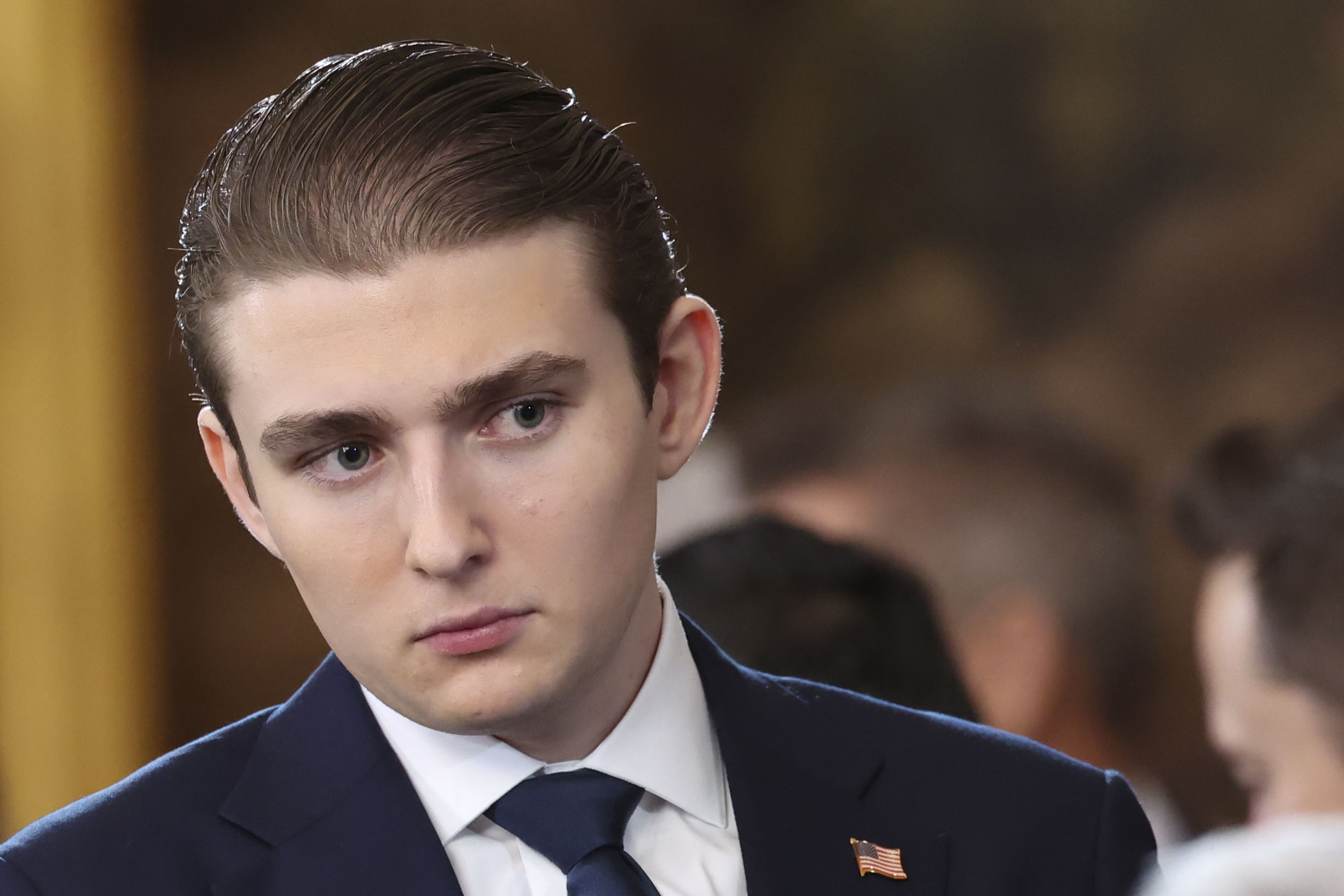
Barron Trump has been tipped for politics. Credit / Getty ImagesSay the name Trump in the US and it’s likely you’ll get some sort of reaction. A byproduct of President Donald’s modus operandi and larger-than-life persona is that one way or another, people do have an opinion.
And yet while there are millions of people who lambast his every move and question how he ever maneuvered his way into the White House’s top job not once, but twice, there are also countless who count themselves diehard fans.
Just what those sitting in the latter category will do when Trump eventually leaves politics, to whom they will turn, remains to be seen. After all, in some ways Trump has transcended the usual harmony of one candidate and their chosen political party; Trump isn’t a representative of the Republicans so much as a one-man political juggernaut.
Yet though he might joke about running for the presidency again in 2028, there are rules and regulations preventing him from doing so. These coming three years will – barring any truly shocking turn of events – mark the last time the name Trump and the office of POTUS go together… at least for the time being.
A new poll has shed some light on what people think to the idea of Barron Trump – the president’s youngest son – following in his father’s footsteps as the supposed Leader of the Free World.
Trump has other children, other sons, but none of them have ever showed any particular nuance for politics, no interest in making serious inroads into the political sphere. Barron, just turned 20, has yet to forge a career, and in recent years he’s become popular among Republican voters.
WASHINGTON, DC – JANUARY 20: Barron Trump attends inauguration ceremonies in the U.S. Capitol Rotunda on January 20, 2025 in Washington, DC. Donald Trump takes office for his second term as the 47th president of the United States. (Photo by Kevin Lamarque – Pool/Getty Images)
Remember, Barron was a young child during his father’s first term in the White House, but prior to this time around, he was old enough to have a say. Reports claim he pointed Donald in the direction of podcasters like Joe Rogan and Logan Paul in an effort to allow him to better connect with male GenZ voters.
In essence, he helped secure valuable votes for his father during the 2024 presidential run, with Trump campaign senior adviser Jason Miller telling Politico: “Barron has been very involved in recommending a number of the podcasts that we should do.
“Hats off to the young man. Every single recommendation he’s had has turned out to be absolute ratings gold that’s broken the Internet.”
Perhaps unsurprisingly, there’s been talk recently regarding the future Barron might try to carve out for himself. Currently a student at NYU Stern School of Business, the world is literally his oyster, but there are obvious ties connecting him to politics if that’s what he wants to do.
Indeed, according to a recent poll by Daily Mail and J.L. Partners poll, Barron might well have strong support if he ever decides to run for president. In fact, there were US citizens comfortable with the idea of the Constitution being altered to allow him to run earlier than is currently legal.
As per the aforementioned poll, 40 percent of Republicans would consider changing the Constitution to allow Barron to announce his campaign for President earlier.
As stands, an individual must be 35 before they make a bid for the presidency, meaning Barron would have to wait fifteen long years before he could attempt to slide into the seat that is currently his father’s.
Meanwhile, thirty-eight percent of Republicans asked in the poll disagreed with amending the Constitution, while 22 percent did not share an opinion on the matter.
Overall, 42 percent of all respondents to the poll rejected the idea of altering the Constitution, with it naturally proving unpopular among non-Republicans. Only 24 percent of those polled in total supported the proposal.
That said, the idea of Barron becoming president via the traditional channels (i.e. waiting until he’s 35) had more support.
A family cleaning out an old storage box discovered a strange object unlike anything they had ever seen. It consisted of two small translucent balls connected by strings attached to a loop. Curious and confused, they shared photos with friends and relatives, but nobody could confidently identify it.
The mystery quickly sparked countless theories. Some believed it was part of a vintage toy, while others suggested it could be an exercise device, a decorative item, or even an unusual kitchen tool. The object’s unusual appearance left everyone puzzled.
Determined to uncover the truth, the family searched through antique catalogs and historical collections. After comparing the mysterious item with old photographs and descriptions, they finally found a match that solved the mystery once and for all.
The object turned out to be a vintage hand exercise toy, often known as clacker balls or click-clacks. Popular decades ago, users would swing the balls up and down so they struck each other, creating a loud clacking sound. The toy became extremely popular because it was simple, entertaining, and challenging to master.
Although many younger people had never encountered one before, older generations immediately recognized it once its purpose was revealed. What began as an internet mystery ultimately turned out to be a nostalgic toy that brought back memories for countless people.
I never expected an old laundry wringer to stop me in my tracks. Yet at a crowded yard sale, I found myself staring at a worn machine of wood and iron that felt like a window into another era. It wasn’t just an antique—it was a reminder of the people and routines that once shaped everyday life.
The vintage laundry wringer spoke of a time when washing clothes required real effort. Families hauled water, scrubbed garments by hand, and fed them through heavy rollers to remove excess water. Laundry day was not a quick chore but a demanding task that often brought neighbors together. While working, people shared stories, offered help, and turned hard labor into a social experience.
Its weathered handles and iron rollers reflected years of use. Every mark seemed to tell a story of perseverance, patience, and care. Long before modern washing machines simplified the process, tools like this were essential in keeping households running.
When I brought the wringer home, I realized I had purchased more than a collectible. I had rescued a small piece of history. Now sitting on a shelf, it serves as a reminder of the generations who worked tirelessly without the conveniences we often take for granted.
In a world focused on speed and convenience, this simple tool honors the strength and dedication of ordinary people. It proves that even the most everyday objects can preserve powerful stories and connect us to the lives of those who came before us.