
Top Ad 728x90

dimanche 20 septembre 2026

If your dog is sniffing your gen!tal area, it means you have See more

by


It’s one of those awkward moments almost everyone has experienced. You’re standing there, minding your business, and suddenly a dog walks up and starts sniffing… right there. It can feel embarrassing, confusing, and even a little uncomfortable. Many people immediately assume something strange or inappropriate is going on. But the truth is far simpler — and surprisingly fascinating.

Dogs experience the world primarily through their sense of smell. What seems odd to us is completely natural to them. That area of the human body simply carries a stronger concentration of scent due to sweat glands, making it one of the easiest ways for a dog to gather information. To them, it’s no different than reading a name tag — they’re just trying to figure out who you are.

In fact, when a dog does this, it’s often a sign of curiosity and even friendliness. They’re not being rude or misbehaving — they’re just following their instincts. Dogs use scent to detect emotions, health changes, and even identify people they’ve never met before. So while it may feel awkward to us, for them, it’s a completely normal way of saying “hello.”

That said, it doesn’t mean you have to just accept it if it makes you uncomfortable. Gently redirecting the dog or stepping back is perfectly fine. Most well-trained dogs will respond quickly to a simple command or distraction. It’s all about understanding their behavior while still setting your own boundaries.

So next time it happens, don’t panic or overthink it. It’s not weird, it’s not personal — it’s just a dog being a dog, using the most powerful sense it has to understand the world around it.

A dog’s nose contains vastly more scent receptors than a human nose, and the part of its brain devoted to processing smells is proportionally much larger. Dogs can separate layers of odor that people experience only as one general smell. Human sweat, skin oils, hormones, clothing, and the scents picked up during the day all provide information. Areas with more apocrine glands naturally attract extra attention because the scent is stronger there.

That curiosity can become more noticeable when a person has exercised, is menstruating, is pregnant, has recently given birth, or carries the smell of another animal. It does not mean the dog has identified a specific disease, and it should not be treated as a diagnosis. Although specially trained medical detection dogs can recognize certain biological changes under controlled conditions, an ordinary pet sniffing someone is usually performing normal social investigation.

Owners can make greetings more comfortable by teaching a reliable sit, stay, or leave-it cue. Rewarding the dog for keeping four paws on the floor and focusing on its handler gives it a clear alternative. Visitors can turn slightly away, avoid excited movements, and offer a hand at a comfortable distance if they want to interact. Punishment is unnecessary and can make greetings more anxious. Calm redirection works better because the behavior comes from instinct rather than deliberate disrespect.

If sniffing becomes obsessive, appears alongside other sudden behavior changes, or cannot be interrupted, a veterinarian or qualified trainer can help rule out stress and improve manners. Otherwise, the moment is best understood for what it is. The dog is collecting scent information in the most efficient way it knows. People are still entitled to personal space, and a courteous owner should step in, but the behavior itself is neither mysterious nor shameful.

Children and guests should never be forced to tolerate contact that makes them uneasy. Creating a little distance, placing the dog on a leash during arrivals, and rewarding calm behavior can prevent embarrassment without frightening the animal. Clear boundaries and patient training allow dogs to follow human social rules while owners continue to respect the powerful instincts behind their curiosity.
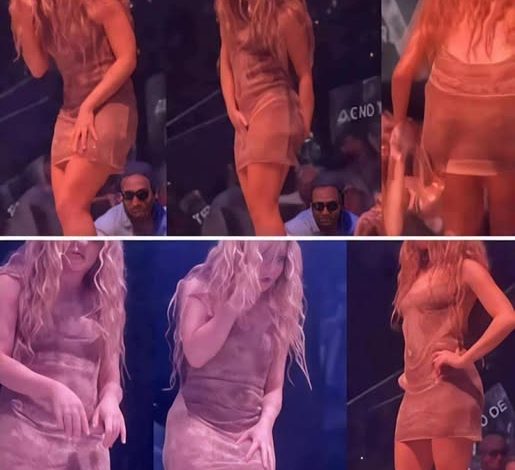

Fans Applaud Shakira s Response to Disrespectful Behavior

by


Shakira has spent decades performing under some of the brightest lights in the entertainment industry. From enormous stadium concerts to award-show stages and intimate promotional appearances, the Colombian superstar is accustomed to having thousands of eyes—and countless cameras—focused on her.

But one viral moment from September 2024 was very different.

During an appearance at a Miami nightclub, Shakira suddenly appeared uncomfortable while dancing in front of the crowd. Within moments, she adjusted her clothing, gestured toward someone nearby, and eventually walked away from the stage.

Videos of the incident quickly circulated online, with reports and social media users alleging that someone in the audience had been attempting to film underneath her dress.

The short clip sparked an enormous reaction.

Instead of criticizing Shakira for interrupting the performance, many viewers applauded her decision to remove herself from a situation that appeared to make her uncomfortable. For supporters, the incident wasn’t simply another celebrity moment caught on camera. It raised a much larger question about privacy, consent, boundaries, and the behavior performers should be expected to tolerate simply because they are famous.

Shakira is known for being an exceptionally energetic performer. Dancing has always been central to her identity as an artist, and her ability to connect movement with music has become one of her signatures.

That is partly why the Miami incident attracted so much attention.

The singer was reportedly appearing at LIV nightclub in Miami while celebrating and promoting her song Soltera. Videos shared online showed her dancing on an elevated platform as people gathered closely around her.

At first, everything appeared to be part of an ordinary celebrity nightclub appearance. Shakira smiled, danced, and interacted with those around her.

Then her demeanor seemed to change.

In footage circulated on social media, Shakira could be seen looking downward toward members of the crowd. She appeared to notice something that made her uncomfortable and pulled at the bottom of her dress before continuing.

A short time later, she appeared to gesture toward the person or people in front of her, seemingly indicating that the behavior should stop.

Reports surrounding the viral clip alleged that someone had been trying to film underneath her dress. Because much of the public discussion was based on short videos and eyewitness interpretations, the precise intentions of the person involved cannot necessarily be determined from the footage alone.

What was much clearer was Shakira’s reaction.

She appeared uncomfortable, adjusted her clothing and ultimately stepped down from the platform rather than continuing to perform in the same circumstances.

That decision became the central focus of the conversation that followed.

In today’s entertainment landscape, an incident lasting only a few seconds can reach millions of people within hours.

That is exactly what happened here.

Clips from the nightclub began appearing across social platforms, where users replayed the moment and debated what they believed had occurred. The story was subsequently picked up by entertainment outlets and news organizations around the world.

For many viewers, the most important detail wasn’t that Shakira had stopped dancing. It was why she appeared to have done so.

The footage seemed to show a performer realizing that a boundary may have been crossed and immediately responding.

Fans argued that she had every right to stop.

A ticket, invitation, nightclub appearance, or celebrity status does not give members of an audience unrestricted permission to photograph someone however they want. The fact that a performer chooses to dance, wear a particular outfit, or appear in a crowded public venue does not eliminate their expectation of basic respect.

That point became one of the strongest themes in the online reaction.

The reaction from fans was overwhelmingly sympathetic.

Many people praised Shakira for refusing to remain in an environment where she appeared to feel disrespected. Rather than treating the interruption as an inconvenience, supporters framed her departure as an appropriate assertion of personal boundaries.

One idea appeared repeatedly in the discussion: fame does not cancel a person’s right to privacy.

Celebrities occupy an unusual position in modern culture. Their photographs are everywhere, their performances are recorded, and details of their lives often become public discussion. Social media has made the boundary between performer and audience even thinner.

But visibility is not the same thing as consent.

Someone agreeing to be photographed while performing does not automatically mean every angle, every moment, or every type of recording is acceptable.

This distinction seemed particularly important to the people defending Shakira.

Many argued that performers should never be expected to tolerate behavior that would be considered inappropriate if directed toward someone outside the entertainment industry.

Others noted that Shakira did not need to continue entertaining the crowd once she felt uncomfortable. Walking away was itself a legitimate response.

The discussion also revealed something broader about celebrity culture.

Fans now have extraordinary access to public figures. Smartphones can record high-quality video instantly. A private-looking moment can become global content before the person being filmed even knows the video exists.

That technological reality has changed the relationship between audiences and performers.

At a concert or nightclub appearance, hundreds or thousands of cameras may be pointed toward the stage simultaneously. Most people simply want a memory of the experience. But the ease of recording can sometimes create the false impression that anything visible is automatically fair game.

It isn’t.

There remains a difference between recording a performance and deliberately trying to capture intimate or invasive footage.

For many fans, the Shakira incident illustrated exactly why that distinction matters.

Public figures may choose careers that involve enormous visibility, but they remain entitled to boundaries concerning their bodies and personal dignity.

The same principle applies far beyond celebrities.

Whether someone is performing before thousands of people, dancing at a party, commuting to work, or simply walking down the street, clothing and location should not be interpreted as permission for invasive behavior.

Part of what made the moment resonate was how little drama Shakira appeared to create around it.

There was no need for an elaborate confrontation.

Based on the widely circulated footage, she appeared to notice something, signal her discomfort, adjust her clothing and eventually leave the immediate area.

Sometimes establishing a boundary is exactly that simple.

A person does not necessarily owe an audience an explanation before removing themselves from a situation that makes them uncomfortable.

For fans, that made the moment especially relatable.

Many people have experienced situations where they suddenly realized someone was behaving in a way that felt inappropriate. In those moments, deciding whether to confront the person, ignore the behavior, seek help, or simply leave can happen almost instinctively.

Shakira’s response reminded viewers that leaving is an option.

The Comedy World Has Lost One of Its Most Beloved Icons

by


The comedy world has been reflecting on the loss of a performer whose warmth and timing made audiences feel as if they knew him personally. The black and white portrait shared with the announcement captured the familiar smile that viewers associated with years of television work. For many fans, the image immediately brought back evenings spent watching favorite characters with family.

A beloved comic performer does more than deliver punch lines. The craft depends on listening, rhythm, and the ability to make an ordinary reaction feel unforgettable. A glance held for half a second longer or a perfectly placed pause can turn a scene into something viewers repeat for decades. That kind of precision often looks effortless because the work behind it is hidden.

His appeal also came from humanity. Even when a character made mistakes or became the target of a joke, there was enough warmth underneath the performance to keep the audience connected. Comedy works best when people recognize something true in it, and his roles reflected the frustrations, loyalties, pride, and affection found in everyday life.

Colleagues remember performers like him for qualities that do not always appear on screen. Reliability, generosity during rehearsals, respect for crews, and support for younger actors can shape an entire production. Those relationships become part of a legacy alongside the episodes and films that remain available to the public.

The reaction from viewers shows how deeply entertainment can become tied to personal memory. Fans are not only mourning an actor. They are remembering the homes where they watched him, the relatives who laughed beside them, and the years associated with those broadcasts. A familiar performance can carry all of that history in a few seconds.

As tributes continue, the most fitting remembrance is to return to the work itself. The laughter is still there, preserved in scenes that can be discovered by new generations. A career built on giving people joy does not disappear when the final credit rolls. It continues each time someone presses play and finds comfort in that unmistakable presence again.

Comedy careers are often measured in laughs, but their deeper influence appears in the performers who follow. Younger actors study how a veteran handles a setup, protects a scene partner, and lets silence do part of the work. Writers remember which lines became funnier because of an unexpected reading. Directors remember the calm professionalism that kept difficult days moving. Those contributions rarely fit inside a short tribute, yet they help explain why a loss is felt across an industry.

There is also comfort in knowing that recorded performances remain accessible. A viewer who never saw the original broadcast can still understand why the work mattered, while longtime fans can revisit scenes with a new awareness of the skill behind them. The portrait announcing his passing may be solemn, but the legacy it represents is filled with movement, character, and laughter. That contrast is part of every farewell to a comic artist: grief for the person, gratitude for the joy, and the certainty that one more familiar scene can still make a room laugh together.

Paris Jackson Crafting a Personal Identity and Artistic Path Beyond Her Famous Family Heritage

by


The world tried to script her life before she could even speak. Cameras, rumors, and expectations stalked her every move, turning childhood into a spectacle and pain into public property. But Paris Jackson refused to stay trapped inside her father’s shadow. Through sobriety, scars, and song, she is rewritin… Continues…

Growing up as Michael Jackson’s daughter meant Paris entered life as a symbol before she was allowed to be a person. In the years since, she has done the painstaking work of reversing that order. Choosing sobriety, committing to therapy, and confronting long-buried trauma, she has turned survival into a conscious, daily practice. Her six years of sobriety are not a headline to her, but a hard-won foundation for living on her own terms.

From modeling and acting to releasing her debut album Wilted, Paris has steadily shifted the conversation from her last name to her inner world. Her art is not an escape from her past, but a way of metabolizing it—transforming pain into something textured, intimate, and entirely her own. By insisting on boundaries, honoring her mental health, and building a life anchored in self-knowledge instead of legacy, she offers a quiet, powerful lesson: your origins may be public, but your healing can still belong to you.

That effort has required Paris to separate inherited fame from personal purpose. Every public appearance is filtered through memories of her father, yet she continues to choose work that reflects her own taste. Music gives her a language for grief, uncertainty, relationships, and recovery without requiring her to explain every private experience in an interview.

Her path has not followed a simple line. Modeling introduced her to another side of the entertainment industry, acting expanded her confidence in front of the camera, and songwriting offered a more intimate form of expression. Each step allowed her to experiment while learning which parts of public life felt authentic and which boundaries needed protection.

Sobriety and mental health have become central to that identity. Speaking honestly about those subjects can help other people understand that healing is not a single breakthrough. It is a series of choices, often made away from cameras, supported by routines and relationships that make stability possible. The work continues even after a milestone is reached.

Paris Jackson’s story remains connected to an extraordinary family legacy, but it is increasingly defined by what she creates and how she chooses to live. She can honor her history without allowing it to decide every future step. That balance, between remembrance and independence, is what gives her artistic journey its strongest meaning.

The attention around her will probably never disappear, but control over how she responds to it has become part of her growth. She can choose when to speak, what to share, and which creative projects deserve her energy. That agency matters after a childhood shaped by decisions made by adults and interpreted by strangers. Her strongest work comes from allowing contradiction to remain visible: confidence beside vulnerability, love for her family beside the need for distance, and ambition beside a commitment to wellness. Those tensions make her story personal rather than simply famous.

Hospice nurses reveal the one word they often hear just 24 hours before someone dies

by


Hospice workers see it again and again—and it never stops hurting. In the final hours, when bodies are failing and breaths grow ragged, one small word can shatter a room: “Mum.” Spoken by lips that are dry, by voices that are fading, by people whose mothers died decades ago. Families freeze. Nurses pause. Time seems to rip open as the dying reach for someone no one else can see. Is it memory? Medicine? Something beyond what we can meas… Hospice caregivers say those final moments often hold a strange, quiet power. A frail man in his nineties, confused for days, suddenly grows calm and whispers, “Mum.” A woman who has not spoken in a week lifts her hand toward a corner of the room, eyes soft, as if greeting someone she has loved her entire life. Clinicians can point to medications, low oxygen, changes in the brain, and the way memory and emotion intertwine under stress. Yet even they admit that science does not fully explain why so many people, at the edge of life, call for the one who first made them feel safe.

For families, the kindest response is not correction but presence. If a loved one says their mother is there, you do not need to pull them back to harsh reality. You can hold their hand, speak gently, and let them rest in that comfort. In the end, what often matters most is not the explanation, but that no one has to leave this world feeling alone.…

BREAKING: Beloved TV Actor Dead at 66 After Private Health Battle

by


The news hit like a body blow. A beloved actress, a former Marine, gone at 66 while the world never knew the full war she was fighting. Fans had just watched her on screen, unaware of the private countdown behind every scene. Now colleagues are shattered, memories pouring in, and the industry is left asking how some goodby… Dee Freeman’s passing at 66 closes the final chapter on a life defined by quiet strength. Before Hollywood ever knew her name, she wore the uniform of a United States Marine, learning the discipline and resolve that later infused every role she touched. On shows like The Young and the Restless, ER, and NCIS: Los Angeles, she didn’t need to dominate the frame to command it; her grounded presence made every scene feel more honest, more human.

Away from the camera, she chose to meet stage 4 lung cancer on her own terms, keeping her illness private while continuing to work, mentor, and show up for others. The tributes now flooding in describe the same woman: generous, fiercely professional, and unfailingly kind. Her final appearances, filmed in the shadow of a diagnosis few knew about, stand as a quiet, powerful goodbye from an artist who gave everything until there was nothing left to give.…

The search for 19-year-old twins Carolina and Luise is over, they were dea… See more

by


The headline feels like a punch to the chest. Two 19-year-old twins, missing, then suddenly declared dead in a few chilling words shared online. Grief, fear, and anger spread in seconds. But beneath the viral posts, crucial facts are still missing, and the real story remains painfully unfin… The story of Carolina and Luise has raced across social media in the most brutal way possible: a short, devastating claim that the twins were found dead, with almost no solid information to hold onto. For anyone reading, it is almost impossible not to imagine the terror of their final moments, or the agony of a family waiting by the phone, desperate for answers that never seem to fully arrive. Yet, beyond the shock, much remains unconfirmed: where they vanished, how they were found, and what truly happened.

That uncertainty matters. In the rush to share, speculate, and grieve online, rumors can easily outrun reality, and families can be hurt twice—first by loss, then by misinformation. Until law enforcement and reputable outlets provide clear, verified details, the only honest position is caution. Whatever the final facts reveal, Carolina and Luise deserve to be remembered not as a viral mystery, but as daughters, sisters, and young women whose story demands truth, dignity, and care.…

Mystery Behind Closed Doors: What Really Happened to the Elderly Woman Inside Room 12?

by


The sirens came too late. By the time the ambulance doors swung open, the quiet roadside motel had already become a stage for horror, suspicion, and whispered accusations. An elderly woman’s final hours, spent in a dimly lit room with the man who vowed to protect her, ended in a way no one can explain. Was it love, betrayal, or murde… By morning, the motel’s cracked parking lot had turned into a gathering place for fear and speculation. Yellow tape fluttered in the damp breeze as detectives moved with hushed urgency, their faces set in the practiced neutrality that never quite hides the weight of what they’ve seen. The man who checked in with her now sat alone in the back of a squad car, his earlier nervousness transformed into a hollow, stunned silence. Neighbors watched from behind screens and curtains, phones in hand, already turning a stranger’s final moments into a story to dissect and debate.

In the days that followed, the case became less about procedure and more about trust. Autopsy results, phone logs, and camera footage could only say so much; they could not explain why a woman who believed she was safe ended her life on a stained mattress beneath buzzing lights. Her family’s grief hardened into a quiet, relentless insistence: that every inconsistency be challenged, every unanswered question pursued. Whether the truth reveals a tragic medical collapse or an unforgivable act of violence, it will not resurrect her. But in a town now haunted by that neon sign, it may be the only thing that lets anyone sleep again.